

New

Lessons In Marketing: How To Sell A Disease To Big Pharma
Seeing Incyte’s “See What’s Possible” campaign — complete with larger-than-life vitiligo models at the AAD meeting in San Diego — was a milestone for our community.
For years, vitiligo flew below the healthcare industry’s radar. Today, it’s front-and-center: the first FDA-approved therapy is on the market, and more than 40 companies are investing in vitiligo R&D.
That momentum didn’t appear by chance; it grew from steady advocacy, data-driven storytelling, and a lot of patient and caregiver voices refusing to be invisible.
It’s proof that even a small non-profit like VRF can help shift perceptions and priorities across an entire field. We’re even considering a white paper on the journey, with the working title “How to Bring an Overlooked Disease to Pharma’s Attention.”
If you’d like to contribute insights or client-side perspectives, let us know!
— Yan Valle
CEO, Vitiligo Research Foundation | Author, A No-Nonsense Guide to Vitiligo
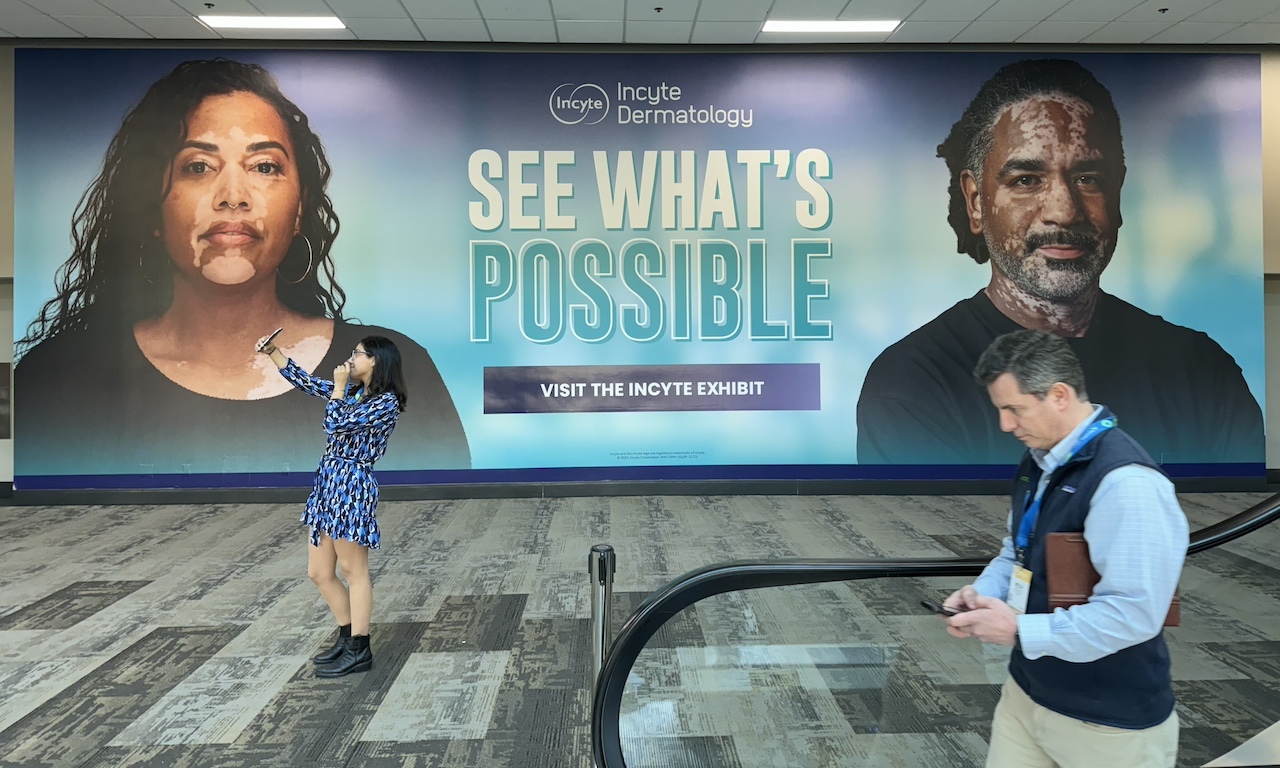
AAD, 2024
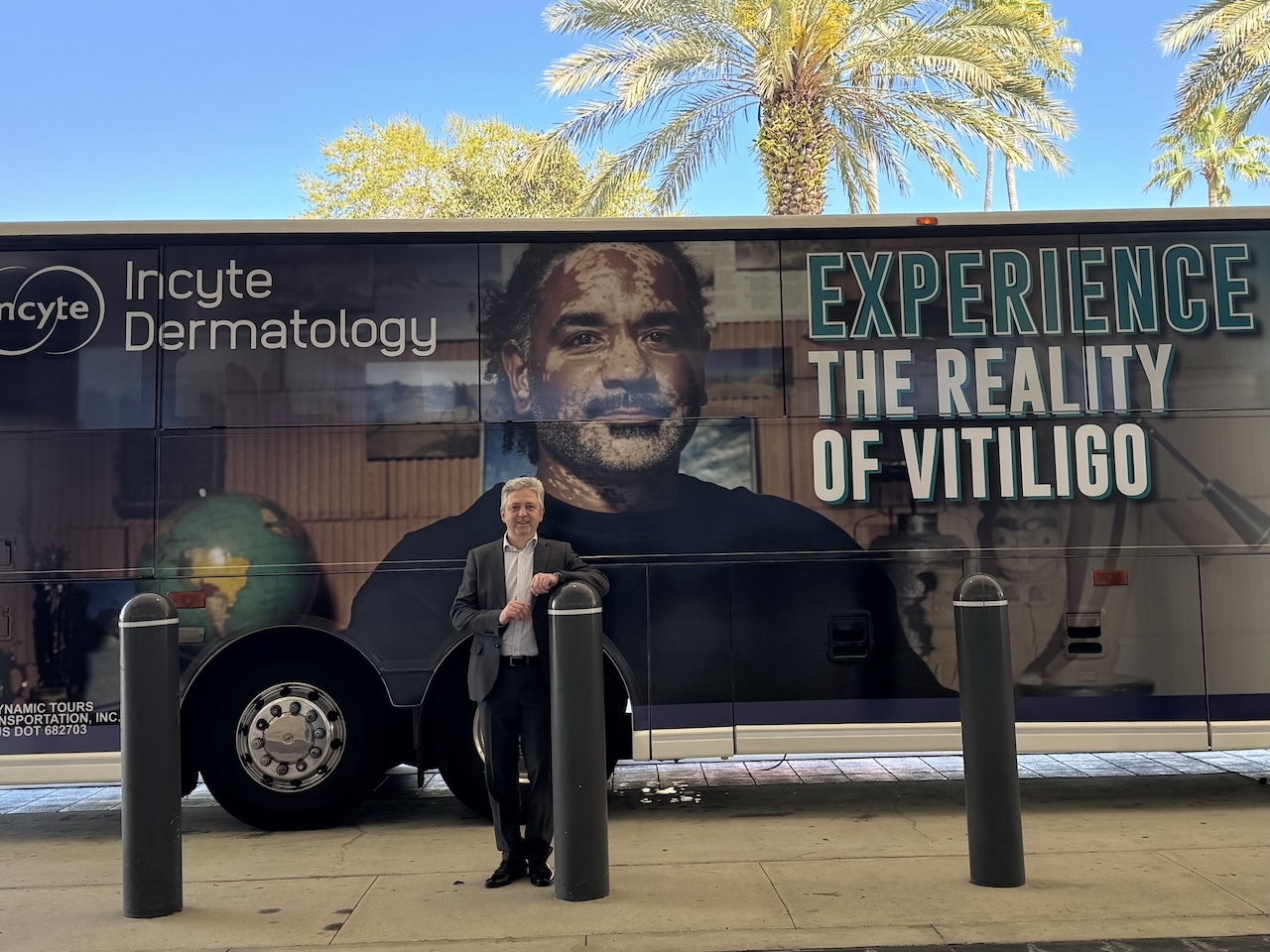
AAD, 2025
FAQOther Questions
- How Vitiligo Changes with Age?
Vitiligo, a condition characterized by the loss of skin pigmentation, can affect individuals at any stage of life. While it often appears before the age of 20, its progression a...
- Who is prone to vitiligo?
Vitiligo can affect anyone, regardless of gender, age, or race. Vitiligo prevalence is between 0.76% and 1.11% of the U.S. population, including around 40% of those with the con...
- Can chemicals cause vitiligo?
Certain chemicals can trigger vitiligo, leading to a condition known as chemical-induced vitiligo. While clinically and histologically indistinguishable from other types of viti...
Though it is not always easy to treat vitiligo, there is much to be gained by clearly understanding the diagnosis, the future implications, treatment options and their outcomes.
Many people deal with vitiligo while remaining in the public eye, maintaining a positive outlook, and having a successful career.
Copyright (C) Bodolóczki JúliaBy taking a little time to fill in the anonymous questionnaire, you can help researchers better understand and fight vitiligo.